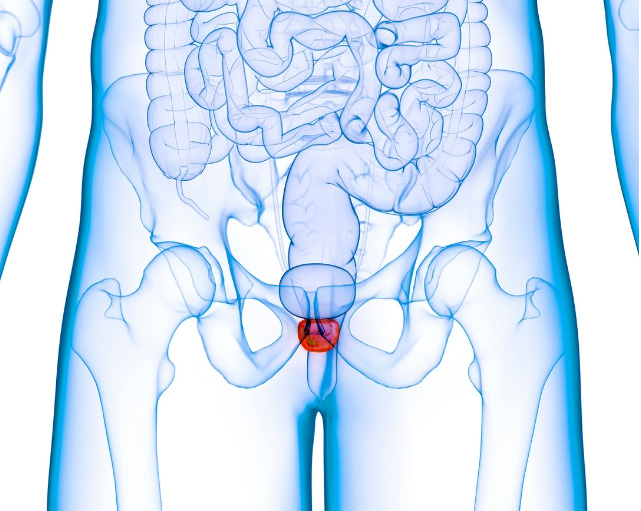
Millions of people wake up every day to the stiff, aching reality of joint inflammation. Whether it stems from years of competitive sports, repetitive stress, or the natural wear and tear of aging, joint pain can severely interfere with your quality of life. For decades, the standard medical response has been a quick, powerful anti-inflammatory injection to silence the pain. But the conversation around peptides vs cortisone for joint inflammation is changing how patients approach relief. As medical science advances, more people are turning to regenerative medicine to actually heal the damage, not just mask it.
Today, we are breaking down a critical conversation in modern pain management: navigating the benefits and drawbacks of traditional treatments versus regenerative approaches.
Understanding Traditional Treatments: The Role of Cortisone
Corticosteroid injections, commonly known as cortisone shots, are manufactured medications that closely resemble cortisol, a hormone naturally produced by your adrenal glands. These injections are delivered directly into the problem joint—such as the knee, shoulder, or hip—to suppress the immune system’s localized inflammatory response.
Cortisone excels at what it is designed to do: stop pain quickly.
- Fast Action: Most patients experience a significant reduction in pain within 24 to 48 hours, with peak effects occurring over the first four to six weeks.
- Accessibility: Cortisone shots are relatively inexpensive (typically $100 to $300) and are widely covered by health insurance.
However, cortisone provides symptom relief by controlling inflammation rather than repairing the underlying structural damage. Because of this, the relief is temporary, usually lasting only 6 to 12 weeks. More importantly, repeated cortisone injections carry significant risks. Frequent use can lead to cartilage degradation, tendon weakening, bone density loss, and diminishing pain relief with each subsequent shot. Because of these side effects, most healthcare professionals limit patients to three or four steroid shots per joint in a single year.
Peptides vs Cortisone for joint inflammation

When evaluating Peptides vs Cortisone for joint inflammation, it is essential to understand the fundamental shift from merely masking symptoms to actively healing tissue.
As an external note, peptides are short chains of amino acids that act as signaling molecules to encourage cellular repair. While isolated peptide injections are growing in popularity for wellness and recovery, the most established and heavily researched regenerative injection in clinical orthopedic settings is Platelet-Rich Plasma (PRP).
PRP therapies harness the body’s natural healing mechanisms by concentrating platelets from your own blood. Once injected into the joint, these platelets release powerful polypeptide growth factors (such as PDGF, TGF-β, and VEGF) that stimulate tissue regeneration at the cellular level.
Unlike cortisone, which metabolizes and eventually leaves the joint unprotected, regenerative treatments initiate a multi-phase healing response. They promote new blood vessel formation and encourage healthy collagen production, addressing the root cause of the pain.
Key Differences at a Glance
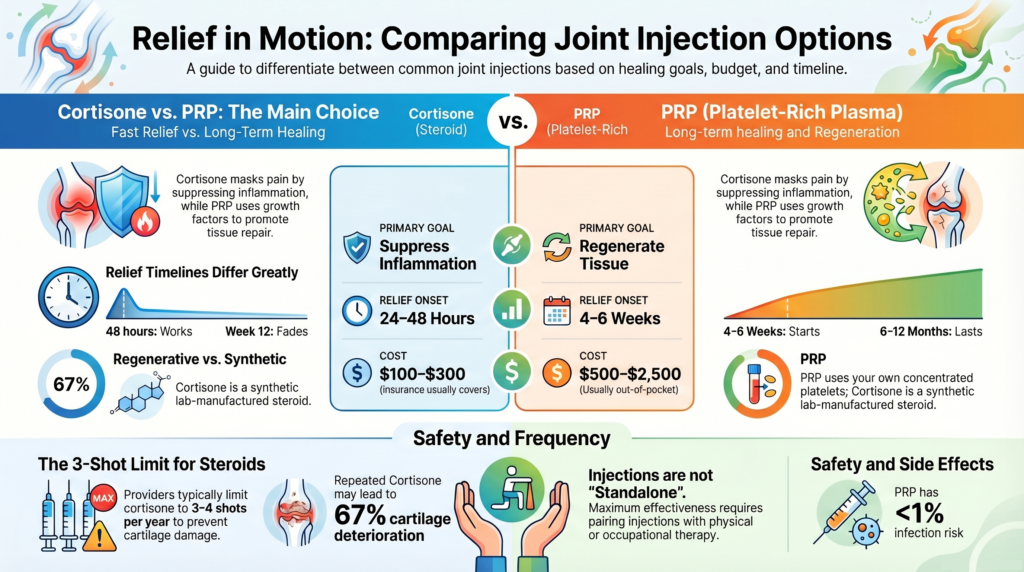
- Mechanism of Action: Cortisone suppresses pain and blocks inflammatory chemicals; regenerative injections promote actual structural repair.
- Timeline to Relief: Cortisone offers rapid symptom control within days. Regenerative therapies require patience, with gradual improvement beginning 2 to 4 weeks post-injection as the tissue rebuilds.
- Duration of Results: Cortisone effects typically fade in 6 to 12 weeks. In contrast, regenerative options like PRP can deliver pain relief that lasts 6 to 12 months, with some studies showing benefits extending up to two years.
- Long-Term Safety: Steroids may be toxic to joint cartilage with repeated use. Therapies utilizing your body’s own growth factors carry minimal risk, do not degrade cartilage, and have no systemic side effects.
- Preparation and Cost: A cortisone shot is a brief 15-minute procedure with no special prep. Regenerative injections require stopping NSAID medications beforehand, involve a blood draw and centrifugation process, and cost between $500 and $2,500 out-of-pocket, as they are rarely covered by insurance.
A Patient’s Journey: Navigating Treatment Options

One of our patients — whose name has been withheld for privacy — is a 54-year-old avid tennis player struggling with chronic knee osteoarthritis. Faced with an upcoming amateur tournament, she consulted us about quickly calming a severe, debilitating pain flare, and following our consultation, she was referred to one of our partner providers for a cortisone shot. The injection worked beautifully, reducing her swelling within two days and allowing her to compete pain-free. However, three months later, the deep, aching joint pain returned. Concerned about our caution that repeated steroids could deteriorate her remaining joint cartilage, she returned to us and decided to transition to a regenerative orthobiologic approach through our network. Though the new treatment required an out-of-pocket investment and a few weeks of patience while experiencing mild post-injection soreness, she eventually experienced sustained, natural relief. The regenerative treatment has kept her active and on the court for the entire following year without needing another needle.
Taking the Next Step Toward Healing
Choosing the right injection therapy is not about finding a single “best” treatment, but rather matching the medical approach to your specific timeline, budget, and long-term goals. If you are experiencing an acute pain flare and need rapid relief to get through the month, cortisone remains a highly effective tool. However, if your goal is durable, long-lasting relief that protects the structural integrity of your joints, regenerative medicine offers a superior path forward.Ready to step away from temporary fixes and take control of your joint health? Contact us today to book an appointment and discover which advanced injection therapy is the right fit for your unique needs.