Your skeleton is a living record of your metabolic health. It constantly remodels itself in response to your hormones, nutrition, and daily physical activity. Today, as groundbreaking GLP-1 medications help millions shed unwanted pounds, the way we talk about health must evolve. We need to shift our focus away from merely celebrating scale-based “weight loss” and instead prioritize compositional integrity—the critical balance of preserving both lean muscle mass and bone mineral density.
For menopausal women, understanding the intersection of rapid weight loss, hormonal shifts, and bone health has never been more vital.
The Intersection of Menopause, GLP-1 Medications, and Bone Health
For women navigating the transition of menopause, protecting skeletal health is already a priority. The natural decline in estrogen directly accelerates bone resorption, placing peri- and post-menopausal women at a significantly higher risk for bone fragility.
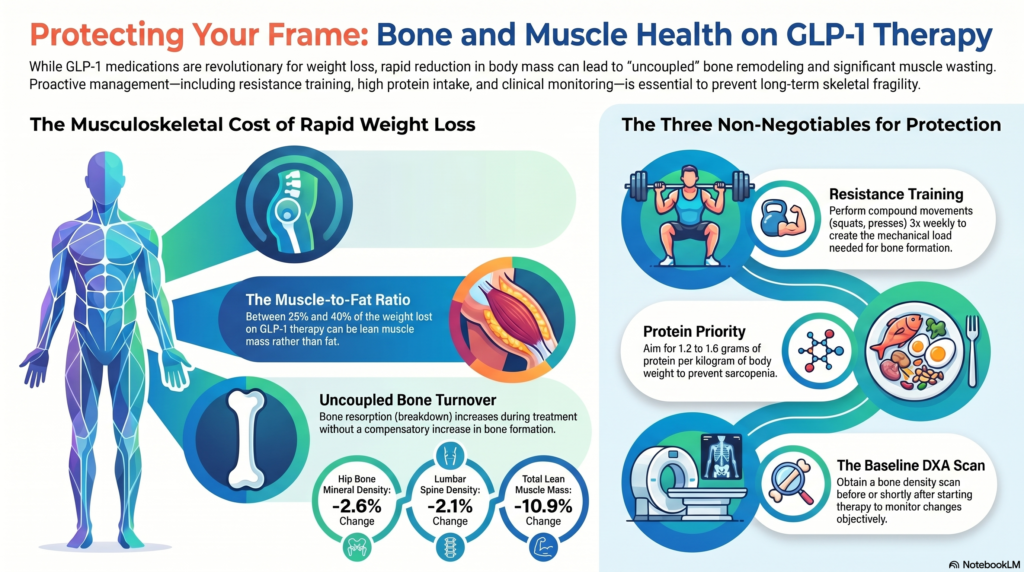
Adding a GLP-1 receptor agonist (such as semaglutide or tirzepatide) to this delicate hormonal environment introduces new challenges. Rapid weight loss inherently reduces the mechanical load that normally strengthens your skeleton. Furthermore, recent randomized controlled trials have demonstrated that 52 weeks on once-weekly semaglutide reduced hip bone mineral density by 2.6% and lumbar spine density by 2.1% compared to a placebo.
The data reveals an “uncoupling” effect: bone is broken down faster than it is rebuilt, leading to a net loss of density. In addition to bone loss, patients may lose significant muscle. In some trials, roughly 25% of the total weight lost was lean mass.
Patient Case Study: Unseen Risks Beneath the Surface
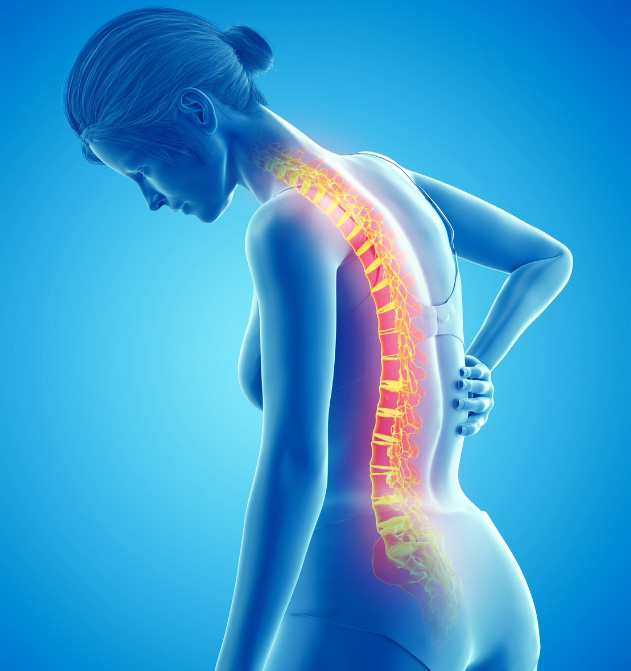
At 54, “Sarah” finally found success managing her weight using a GLP-1 medication, shedding 35 pounds in under a year. While she was thrilled with her newfound energy and how her clothes fit, she began to notice a slight, persistent ache in her lower back and felt physically weaker.
After reading about the muscle and bone loss associated with rapid weight loss, she grew deeply concerned. Sarah realized she had no idea if her underlying bone density was quietly deteriorating beneath her celebrated weight loss. Her experience highlights a critical reality: weight loss success should not come at the cost of skeletal strength.
Evaluating Your Risk: Clinical Decision-Making Tools
Because bone loss is often silent until a fracture occurs, early risk assessment is essential. Not everyone on a weight-loss journey faces the exact same skeletal risks. Before scheduling costly imaging, healthcare providers can use internationally validated clinical decision-making tools to triage patients and predict osteoporosis risk.
Studies emphasize the accuracy of these screening instruments for postmenopausal women:
- SCORE (Simple Calculated Osteoporosis Risk Estimation): This highly effective tool utilizes simple metrics like age, weight, race, and estrogen use to predict osteoporosis risk. Research has shown SCORE to possess an impressive sensitivity of over 91% for predicting femoral neck osteoporosis.
- ABONE and ORAI: Similar to SCORE, these tools assess your age, bulk (weight), and estrogen therapy history to quickly identify if advanced imaging is warranted.
These tools are inexpensive, rapid, and require no sophisticated technology, making them perfect for early surveillance and accessible care.
The Convenience of Telehealth Osteoporosis Screening
Because clinical decision-making tools rely on a patient’s medical history and basic physical parameters rather than invasive procedures, they are perfectly suited for modern virtual care. Telehealth osteoporosis screening is transforming how women manage their skeletal health from the comfort of their homes.
Through a secure consultation, your provider can:
- Evaluate your specific risk factors.
- Calculate your SCORE or ABONE index.
- Determine your baseline risk for fractures.
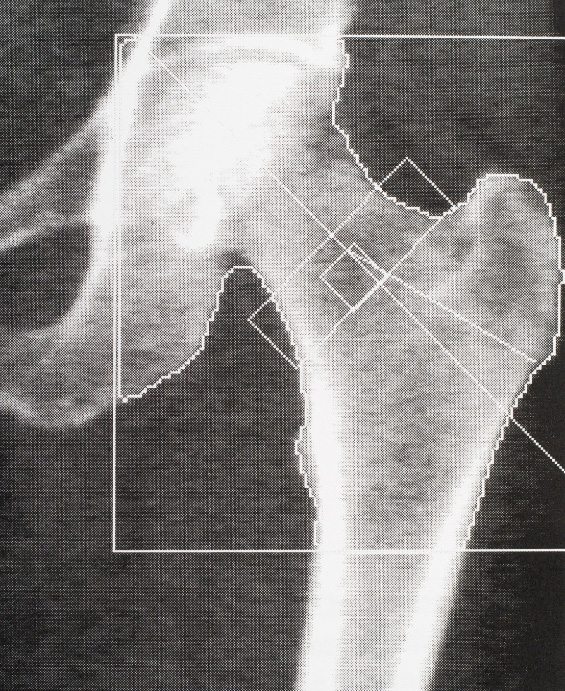
If your screening indicates a high likelihood of compromised bone density, your provider can seamlessly order a DXA scan (Dual-Energy X-ray Absorptiometry) to objectively measure your hip and lumbar spine density. This proactive approach empowers you to act early, ensuring you aren’t waiting for a devastating fall to discover you have osteoporosis.
Strategies to Protect Your Compositional Integrity

Protecting your bone density during menopausal changes and GLP-1 therapy requires a multi-faceted action plan. Take charge of your compositional integrity with these foundational steps:
- Prioritize Resistance Training: Engage in strength training at least three times a week using compound movements like squats and lunges. This creates the mechanical loading signal necessary to drive bone formation and preserve muscle mass.
- Optimize Protein Intake: Aim for 1.2 to 1.6 grams of protein per kilogram of body weight daily. This supports muscle protein synthesis, counteracting the lean mass deficits often seen with rapid weight loss.
- Ensure Proper Supplementation: Because GLP-1 medications suppress appetite, your intake of essential nutrients may drop. Supplementing with 1,000 to 1,200 mg of Calcium and 1,500 to 2,000 IU of Vitamin D3 daily is critical to support bone mineralization.
- Get a Baseline DXA Scan: Using insights from your initial screening, obtaining a baseline DXA scan allows you and your provider to objectively track your skeletal health over time.
Take Control of Your Bone Health Today
Rapid weight loss and menopausal hormonal shifts do not have to dictate your long-term mobility and independence. By understanding the clinical tools available for early evaluation and prioritizing your compositional integrity, you can safely achieve your health goals while safeguarding your skeleton.Are you ready to understand your true bone health? Contact us today to book your telehealth osteoporosis screening and take the first step toward building a resilient, strong future.