As we observe the 2026 National Eating Disorders Awareness Week and its poignant theme, “Health at Every Age,” it is vital to acknowledge the profound emotional weight of growing older in a youth-obsessed society. For many women in midlife, stepping on the scale can feel like a daily judgment. But here is the truth: your worth is not, and never has been, tied to a fluctuating number.
In 2026, we are finally seeing the medical community shift away from reactive, weight-centric models. Instead, we are moving toward an empowering framework that honors your health across your entire lifespan. For those navigating the complexities of their 40s, 50s, and beyond, this means rethinking how hormonal transitions impact your body image, your heart, and your nutritional needs.
The Biology Behind the Shift: It Is Not a Moral Failure

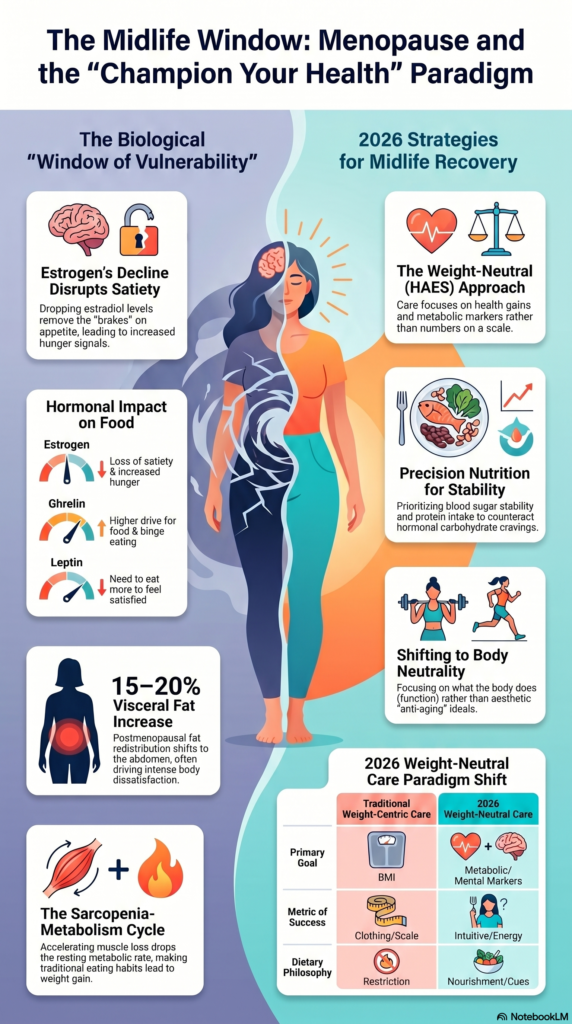
If you feel like your body is changing despite maintaining the same habits you’ve had for decades, please know that you are experiencing a biological reality, not a lack of willpower. The menopausal transition is marked by what experts call a “metabolic transition window.” During this time, unpredictable fluctuations in estrogen and progesterone do more than just cause hot flashes; they disrupt nearly every system in your body, including how you experience hunger.
- The Hunger Surge: Estrogen naturally helps suppress appetite and signals when you are full. As it declines during perimenopause, many women experience a sudden surge in hunger and a frustrating loss of those “I’m full” cues.
- The Physical Shift: As estrogen’s protective effects wane, the body naturally moves fat storage from the hips to the abdomen. This increase in “visceral fat” is a biological survival mechanism, yet so many women interpret it as a personal failure.
- The Metabolic Slowdown: The natural loss of muscle mass (sarcopenia) accelerates during this time, which can lower your resting metabolic rate. When you add chronic sleep deprivation and spikes in cortisol (the stress hormone) to the mix, it creates a “perfect storm” for intense sugar cravings and inflammation.
The Hidden Epidemic of Midlife Disordered Eating
Because of these intense biological shifts and relentless cultural pressures, midlife has emerged as a new “window of vulnerability” for disordered eating. You are not alone if you recognize yourself in these patterns:
- Binge Eating: This is the most common pattern in midlife. It is often triggered by a mix of hormonal hunger signals and a deep, psychological need to feel a sense of control amidst “hormonal chaos.”
- Orthorexia: This often starts as a commitment to “healthy living” but turns into an obsessive fixation on food “purity.” It is frequently a desperate attempt to manage weight gain or health anxieties.
- Latent Vulnerability: Interestingly, the hormone shifts of menopause mirror those of puberty. This can sometimes trigger painful relapses of eating struggles—like anorexia or bulimia—that first began in adolescence.
- Psychosocial Stressors: Beyond biology, midlife brings massive identity shifts. Whether it’s the “empty nest,” caring for aging parents, or navigating career changes, food often becomes a primary coping mechanism for the stress.

A Moment of Reflection Consider a typical 52-year-old patient who feels completely betrayed by her body. Despite eating only “pure, clean” foods, she notices sudden abdominal weight gain and can’t sleep. Her intense restriction, combined with her body’s declining satiety cues, leads to late-night binge episodes. She feels ashamed, unaware that her eating patterns are being driven by a complex interplay of estrogen depletion and high cortisol. She doesn’t need a diet; she needs compassion and specialized care.
Healing Your Relationship with Food

Healing requires a radical shift in perspective. A “weight-neutral” approach recognizes that trying to force weight loss during this transition is often unsustainable and can actually stress your heart through “yo-yo” dieting.
To start your healing journey, consider these evidence-based strategies:
- Embrace Body Neutrality: If “body positivity” feels too out of reach right now, try body neutrality. Instead of focusing on how your body looks, focus on what it does—its strength, its resilience, and the life it has allowed you to lead.
- Prioritize Life-Stage Nutrition: Work with your physiology, not against it. Consuming adequate protein helps protect your muscle mass, while fiber and healthy fats stabilize your blood sugar. This prevents the “crashing” feelings that lead to intense cravings.
- Explore Comprehensive Care: You don’t have to white-knuckle this. Menopausal Hormone Therapy (MHT) can help stabilize estrogen levels and restore the “brakes” on your appetite. When paired with supportive therapies like CBT-e or Acceptance and Commitment Therapy (ACT), you can find the mental flexibility to embrace this new chapter.
Take the Next Step Toward Holistic Wellness
Menopause is a profound biological threshold, but it does not have to be a battle. The shifts you are experiencing are a natural part of the human experience, and finding peace with your body is entirely possible.
You do not have to navigate this alone. If you are struggling with your changing body, we are here to help. Contact us today to book an appointment with our integrated care team. Together, we can build a personalized, empowering path toward genuine health and vitality.